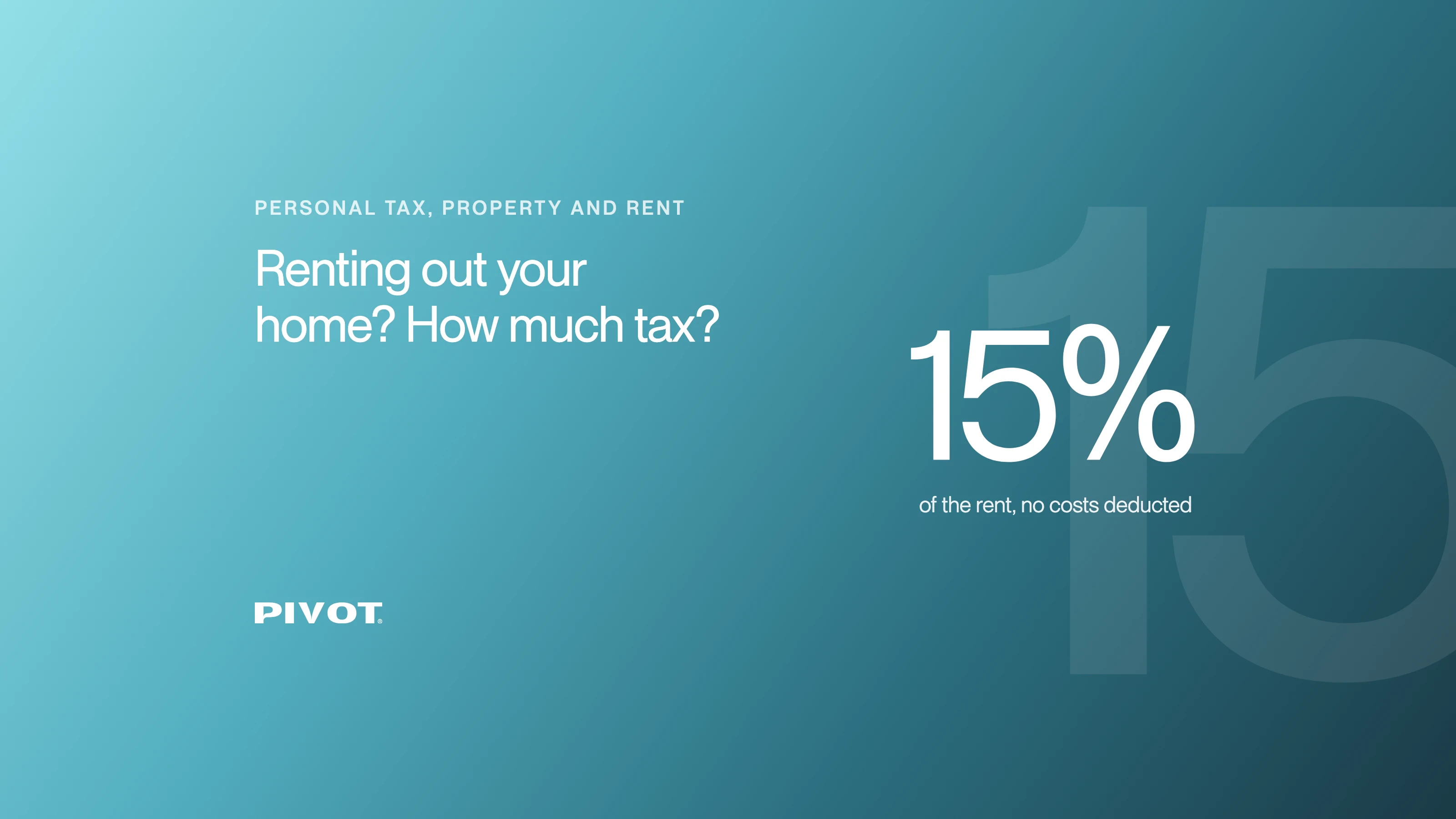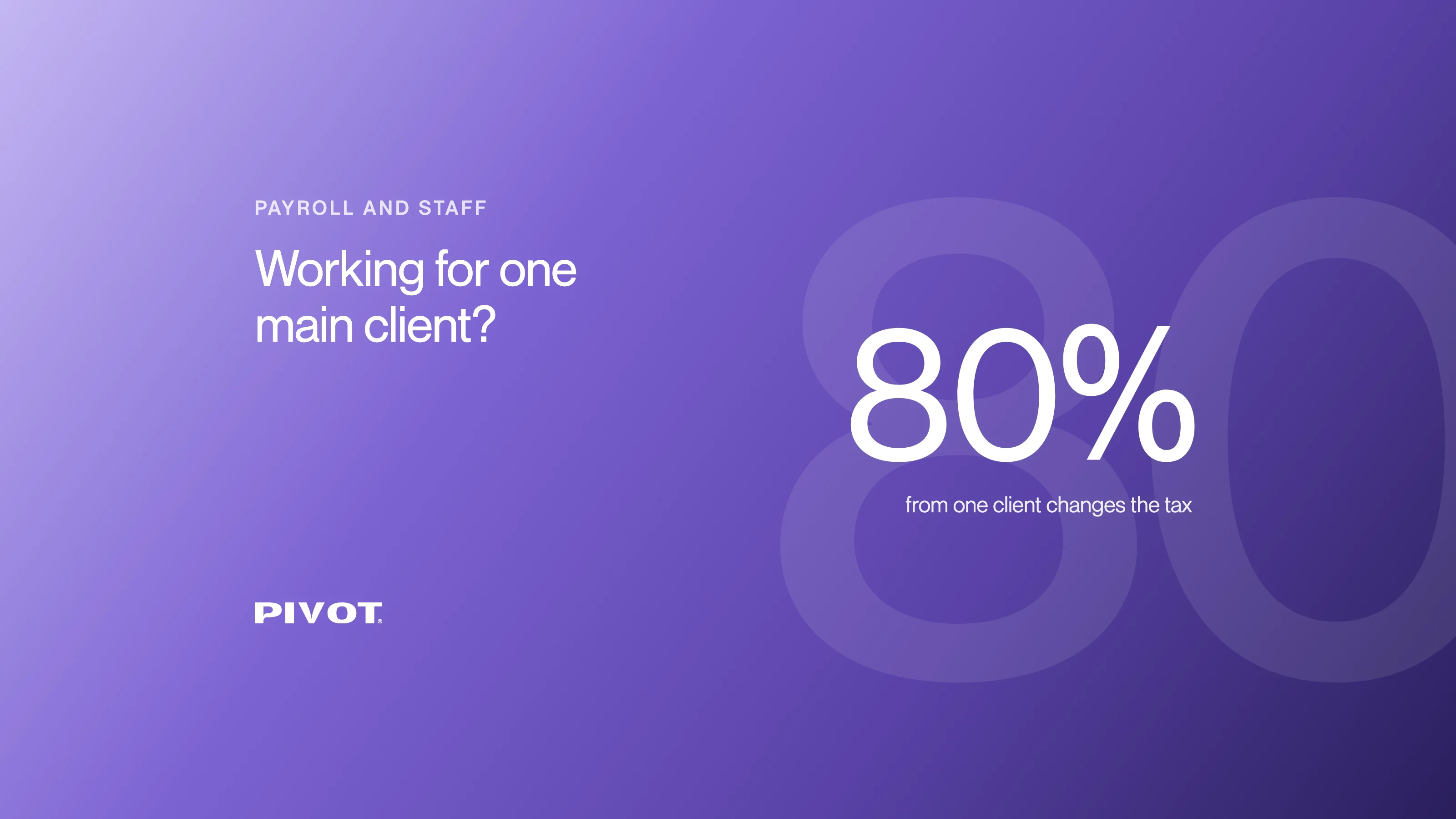
If one client pays you 80% or more of your income, the Albanian tax office treats you as that client's employee. The same happens when two clients pay you 90% or more. The difference is large: as a self-employed person with income up to ALL 14 million you pay 0% profit tax until 2029, while a salary is taxed at 13% and 23%. There is a legal way out, but it takes a declaration in March and a working relationship that really is independent.
Work out your clients' shares
Enter what each client paid you in the year. The tool shows each one's share and whether you meet either test. The prefilled figures are the ministry's official example.
Do you meet the 80% or 90% test?
Enter up to five clients. The calculation stays on this page.
The prefilled figures are the official example in Instruction no. 9/2026: ALL 2.9 million of 3.5 million from one client. Write it as 2,900,000 or 2900000; leave unused clients empty.
Largest client: 82.9% · Two largest: 94.3%
One client pays 80% or more. By default this income counts as employment income. To keep it as business income, file the self-employed status declaration with your annual return in March, and be ready to show that you work independently.
No signs ticked.
Orientation, not a ruling. The tax office decides after looking at the real relationship and can reclassify the income even when the declaration was filed.
Your choices stay on this page and reset on reload. They are not sent to Pivot or the tax authority.
Official source: Albanian tax authority, 19 March 2026What the rule says
Article 12 of Law no. 29/2023 on income tax treats a self-employed person's income as employment income when either test is met. The tax administration calls it the "anti-avoidance article". It is aimed at people who in practice work as employees but invoice as a business.
The tests are applied to the income of the tax year. The name of the contract does not matter. What matters is who pays you and how much.
The way out: the self-employed status declaration
The law lets you declare that you are not in an employment situation, even when you cross the threshold. The self-employed status declaration is filed electronically together with the annual business income return, during March of the following year. For 2026 income, that means during March 2027.
You fill it in for one contracting client when you meet the 80% test, and for two when you meet the 90% test. For each client it asks:
The official examples: who is an employee and who is not
Instruction no. 9 of 12.3.2026 gives five cases. They show clearly how the administration thinks.
Who is outside the rule
The rule does not apply when you serve only people who are not resident in Albania, or only entities with no permanent seat here. In that case the income is automatically business income and no declaration is needed. This covers many developers and designers working for foreign companies.
Careful: the law says "only" foreign clients, so a single Albanian client means this exclusion no longer applies as written.
Illustrative example: a developer earns ALL 3 million a year, ALL 2.7 million from a German company with no seat in Albania and ALL 300,000 from a business in Tirana. The German company pays 90% of her income. Because she does not work only for foreign clients, the test applies. For the income to stay business income, she needs the status declaration in March.
How Pivot helps
Before March, we check each client's share of your income. If you cross the threshold, we help you judge honestly whether your work is independent and prepare the status declaration with the facts that support it. If the case does not hold up, we show you the other route before an inspection finds it.
Talk to Pivot about your annual return. Related: PF or SH.P.K. in Albania and Albania's business taxes explained.
Official sources and period
Sources: Law no. 29/2023 on income tax, as amended by Law no. 81/2025, articles 12(1)(ç), 24 and 69(1)(dh), annex no. 1; Instruction no. 9 of 12.3.2026, point 12.8.1. Checked on 28 October 2026. Rates apply to the 2026 tax year. The developer example is illustrative.